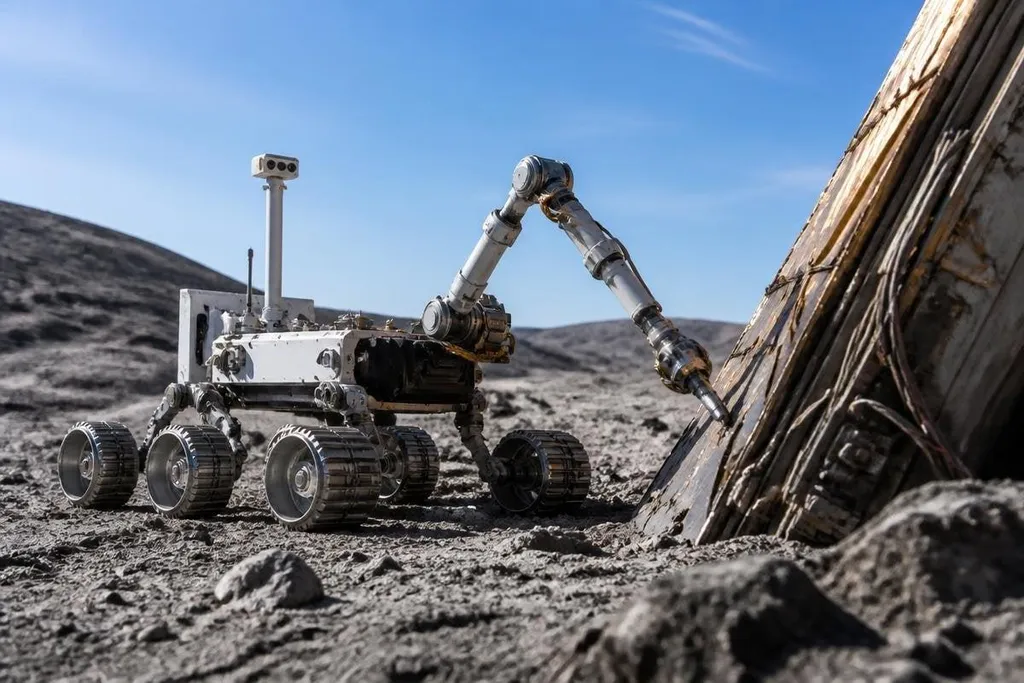
A space robot can inspect a damaged panel, carry tools across rough ground, or collect a sample without putting a person in a suit. That matters because vacuum, radiation, weak gravity, and long communication delays make many jobs slow and risky for crews.
- Robots can work outside a spacecraft without using oxygen or suit time.
- Cameras, force sensors, and robotic arms let machines inspect and handle objects.
- Human control remains useful when a task needs judgment or careful movement.
Why robots fit space work
Space missions put a high price on every kilogram, watt, and minute. A robot still needs power, software, cameras, and a way to survive launch, but it can work in places where a person would need life support and protection.
That changes the work plan. A crew can stay inside a spacecraft while a robot checks the outside surface, moves cargo, or prepares a work area. The machine takes the first look, so people can spend their limited time on tasks that need judgment.
The setting also favors machines that can repeat a task. A robotic arm can move along the same path many times, which helps when it must place a sensor or turn a tool in a fixed location. Its control software can combine camera data with joint position data to keep the arm from pushing into nearby hardware.
How control works far from Earth
Space robots use several levels of control. An operator may send a direct command, set a sequence of steps, or give the robot a goal and let its software choose small movements. The right level depends on the delay in the communication link and the risk of a mistake.
Direct control works well when the signal delay is short and the operator can see the robot's actions. It becomes harder when a command takes time to reach the machine and the video returns later. In that case, the robot needs enough onboard software to stop, wait, or correct its path when the scene changes.
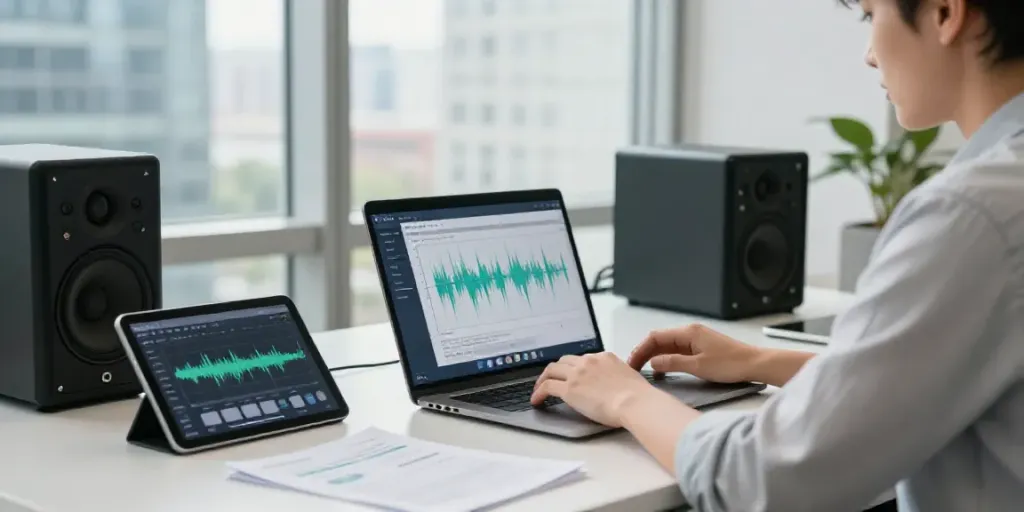
Sensors make that possible. Cameras show shape and position. Force sensors can tell when a gripper meets resistance.
Inertial sensors measure motion, and thermal sensors can show a hot component before a fault spreads through nearby equipment.
A robot does not need full independence to be useful. A person can set the goal, review the planned movement, and take control when the machine reaches an uncertain step. This mix of human decisions and machine movement suits work where the cost of a wrong action is high.
Distance changes the work: crews may set goals while robots handle movement in orbit or across planetary surfaces. Reports on space robotics from Robot24.com put named missions, control methods, and machine limits beside each claim before the next section asks what robots can change for crews.
What robots can change for crews
Robots can give astronauts more time inside a pressurized cabin. That reduces suit wear and limits the number of hours a person spends outside the spacecraft. It also lets mission planners send machines ahead to inspect equipment or prepare a landing area before a crew arrives.
It can keep working during periods when a crew is asleep, busy with another task, or unable to leave the cabin. That does not mean it can handle every job. Loose soil, unknown objects, poor lighting, and damaged tools can still confuse its sensors or leave the machine unable to recover.
Maintenance is another limit. Space robots need sealed joints, protected electronics, and software that can deal with radiation. A small fault can stop a motor or leave a tool in the wrong place, and repair may be impossible if no person can reach the machine.
The machine also needs a clear recovery plan. It should know when to stop moving, save its sensor data, and wait for a new command. If it keeps trying after losing contact, it can turn a small fault into a lost machine.
A practical test for a space robot
Before a mission gives a robot real work, check these points:
- Task fit: Can the robot do a defined job with its available tools?
- Signal delay: Will operators see enough data before sending the next command?
- Failure recovery: Can the robot stop safely after a sensor or motor fault?
- Power use: Does the task fit the available battery and heating limits?
- Human backup: Can an astronaut take control when the software reaches an uncertain step?
The strongest space robot is not the one with the longest list of features. It is the one that can finish a narrow task, report what happened, and stop safely when conditions fall outside its design.
I’d put that dependable routine ahead of a machine that looks capable in a short demonstration. The next measure that matters is simple: how many useful tasks a robot can finish before a person has to step in.